Originally published by The Courier Journal. View the article here.
Key Points
- The de Paul School in Louisville uses a unique five-pillar approach to teach students with learning differences.
- The teaching method is designed for students with dyslexia or ADHD who may struggle in traditional classrooms.
- Kentucky is among many states pushing for more science-backed, explicit reading instruction like that used at de Paul.
- The school aims to build academic skills and confidence for students who have a history of learning difficulties.
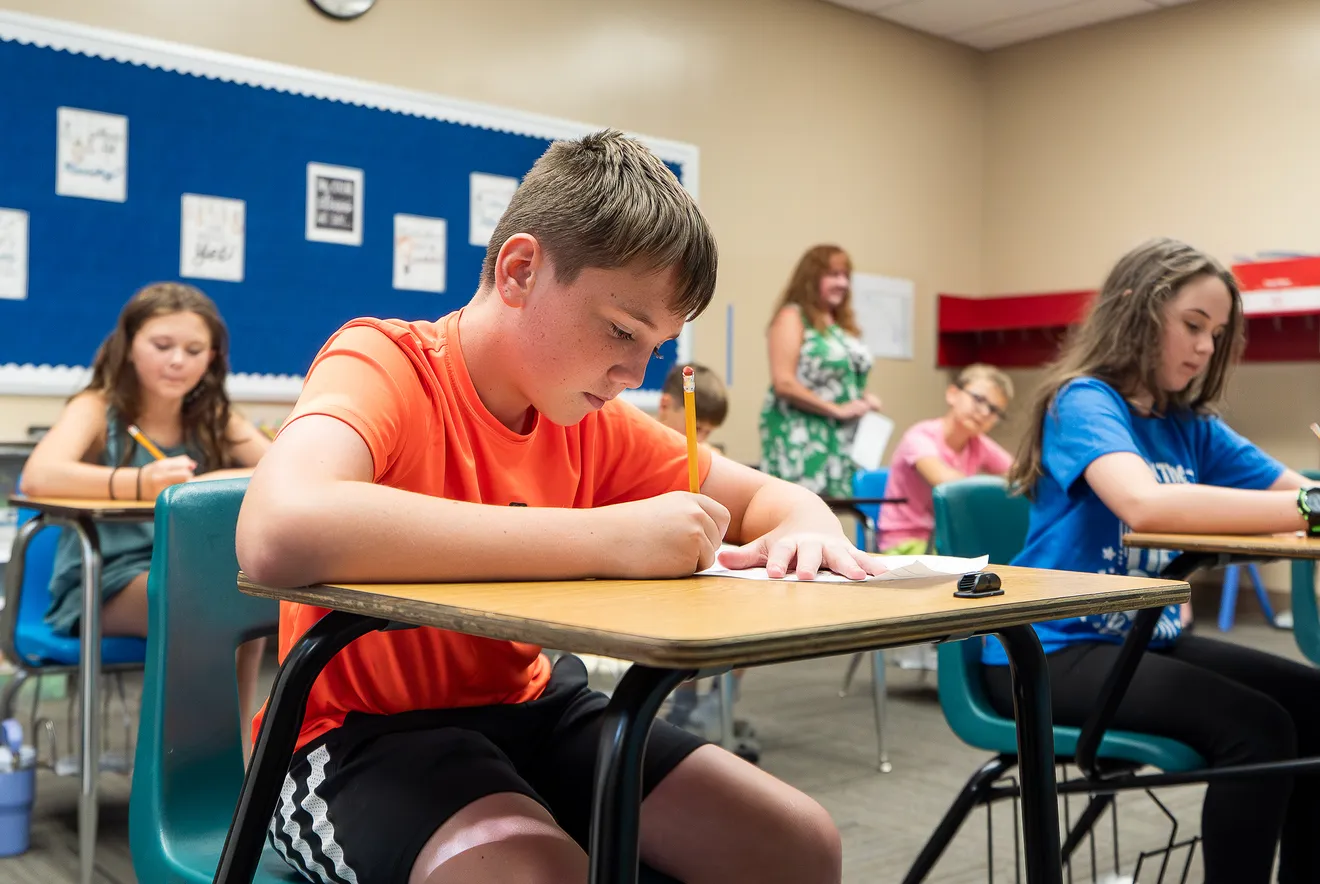
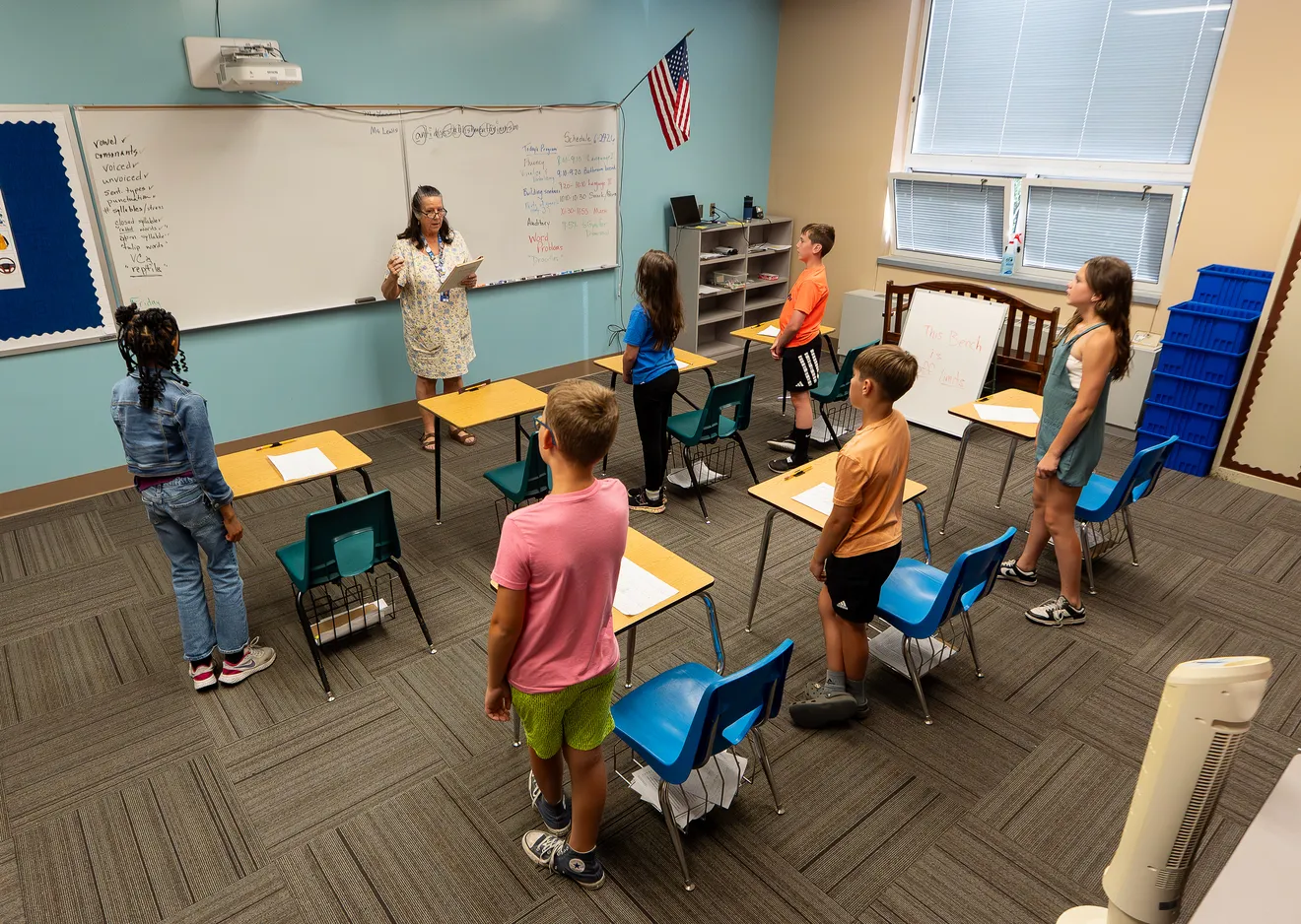
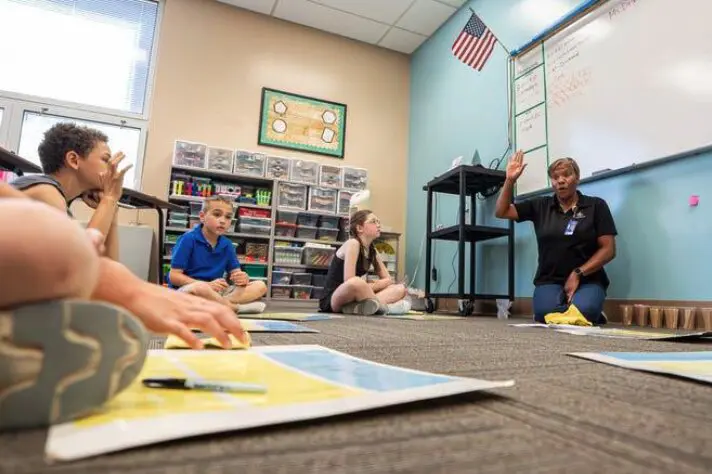
On a warm June Wednesday at The de Paul School, a small group of 4th and 5th graders chanted with their teacher. “A word family is a group of letters beginning with a vowel used to build words,” the class echoed rhythmically.
Teacher Julie Lewis issued a reminder to her students — “you are listening for the mouth sound” — before the class started drilling different words out loud.
“Fit,” Lewis called out. “It, I-T, it,” the class responded, saying then spelling the ending of the word.
“Tab,” Lewis said. “Ab, A-B, ab,” the students responded in quick succession. “Run.” “Un, U-N, un.”
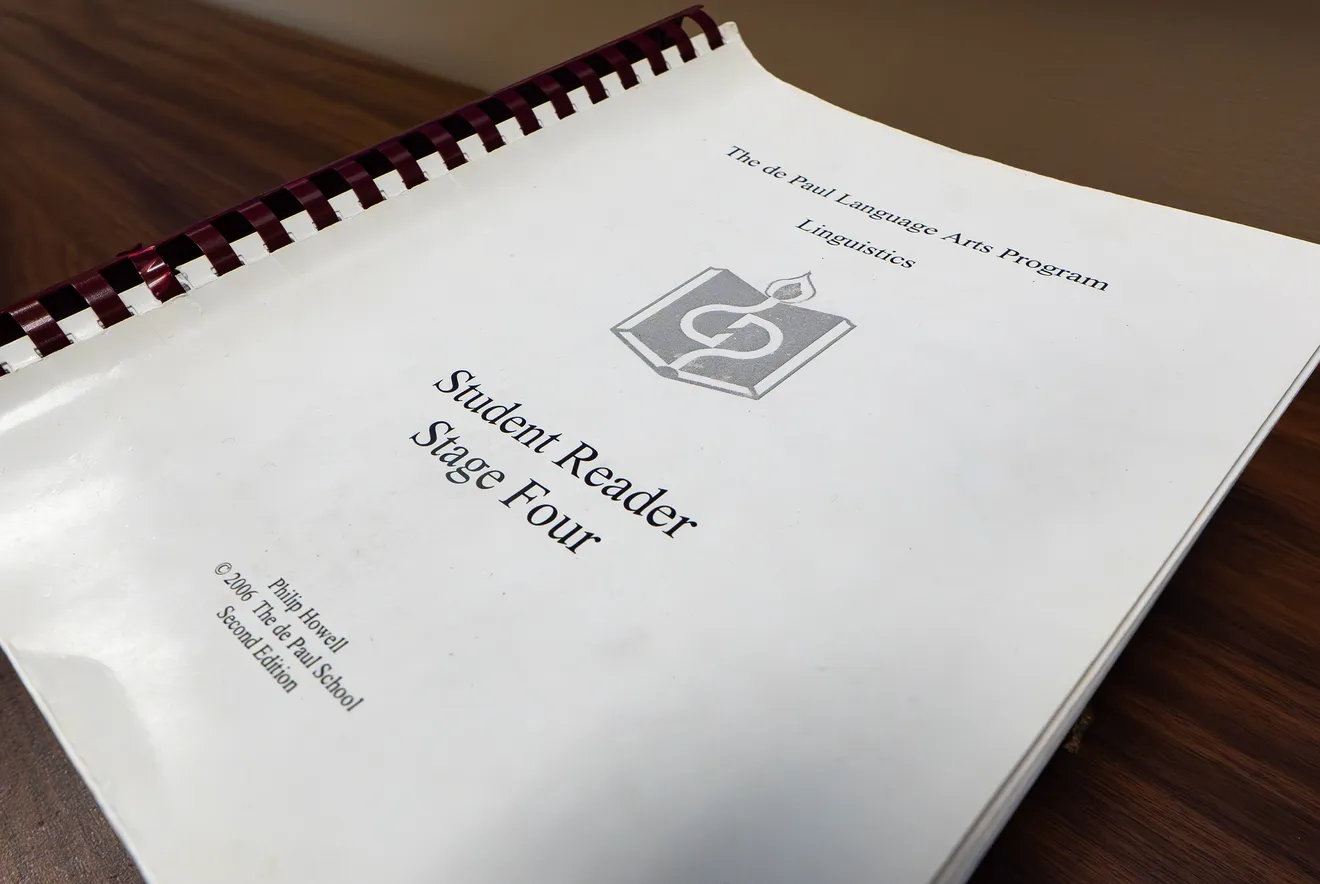
These auditory drills — just one part of a reading lesson given during de Paul’s summer program — are an example of the K-8 private school’s unique approach to instruction that’s shaped for kids with learning disabilities. Teachers design instruction around five pillars to meet the needs of students with dyslexia or ADHD: structured, attention-based, multisensory, practice-rich and explicit instruction.
While teachers or curriculums at other schools (especially in special education) may all incorporate these techniques, de Paul outlines specific pillars to ensure consistency between classrooms.

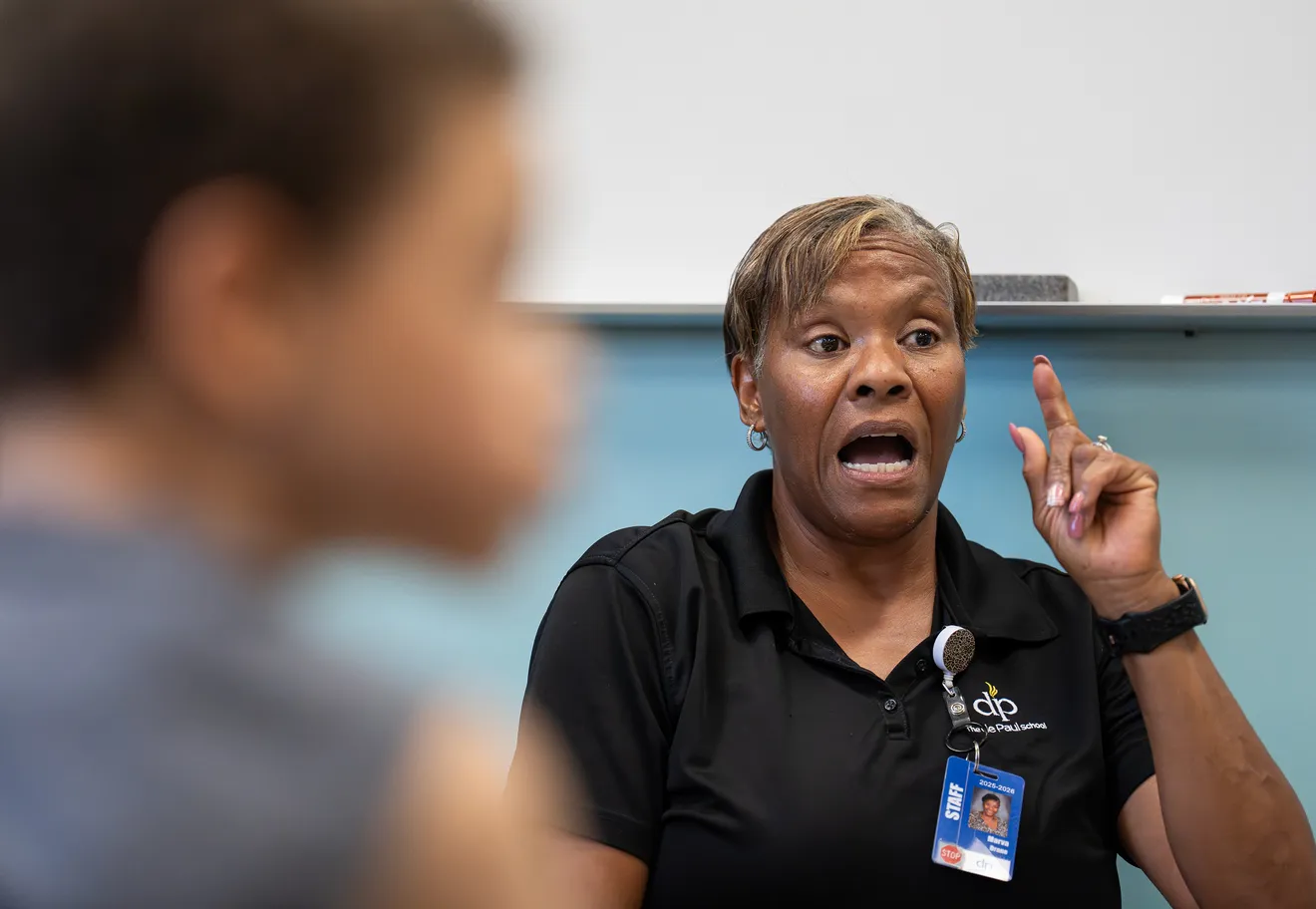
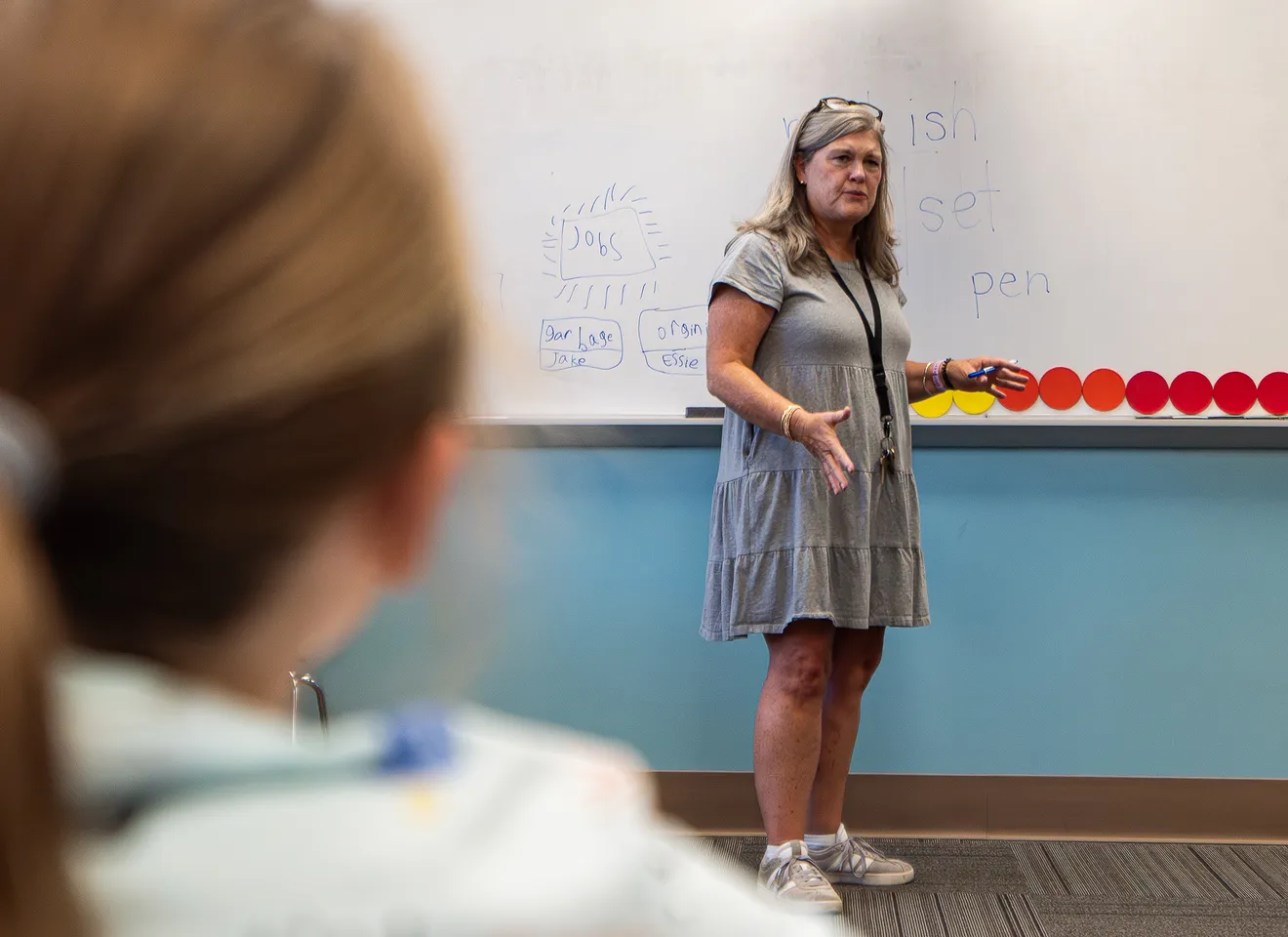
“You can’t come and work here and do your own thing,” said Erin Whicker, the school’s admissions director and co-director of the summer program. “… Everybody puts their own personality into it and their own creativity, but the delivery is always really similar.”
The de Paul School’s approach
The first pillar, structure, aims to “remove internal and external chaos,” especially for students who have difficulty focusing. It involves teaching the students how to organize their work and their materials, designing a calm classroom and making sure concepts are taught sequentially.
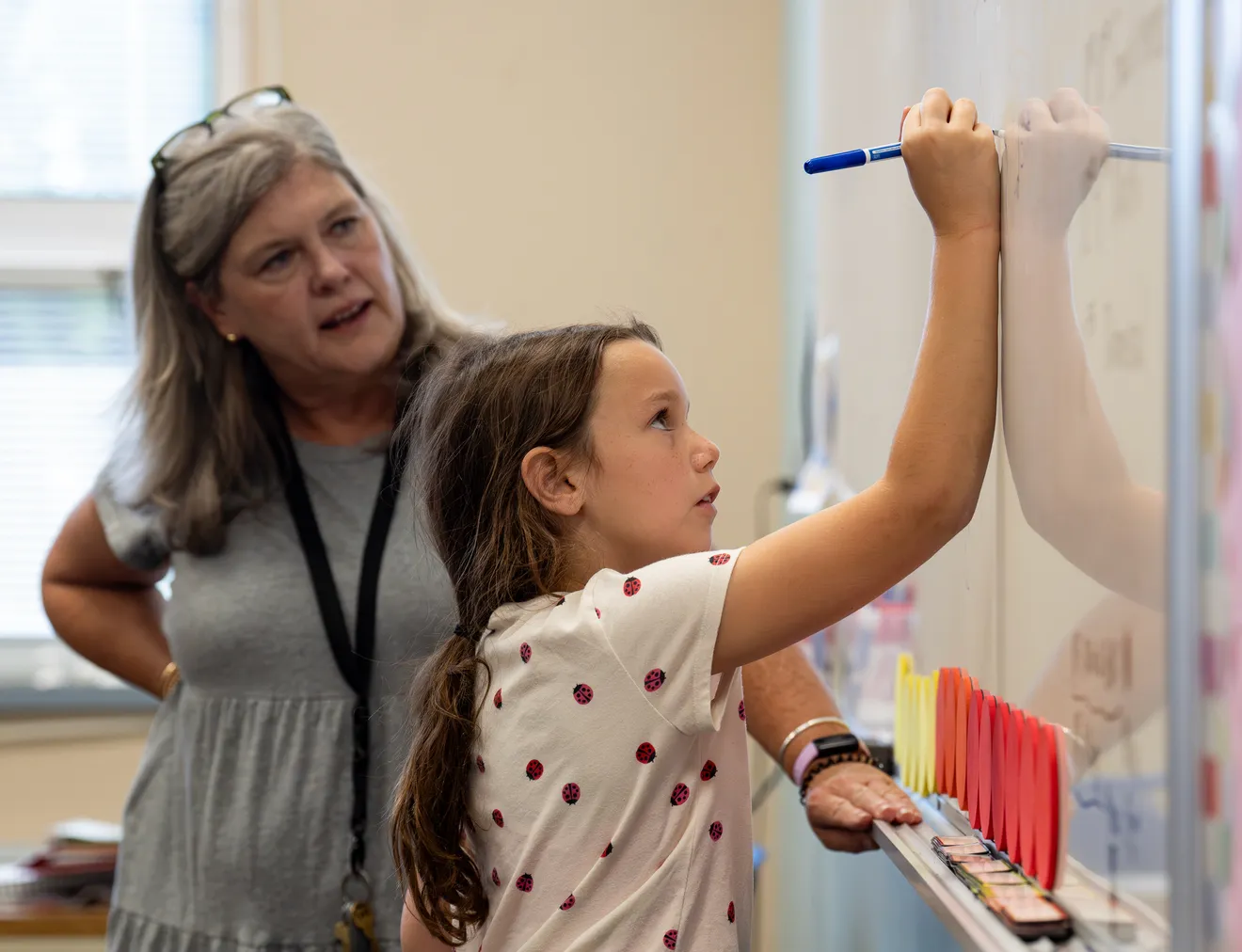
Attention-based instruction means teachers work to maintain student attention through quick pacing, lesson variety and subtle cues. This can look like having students stand and sit repeatedly throughout a lesson, moving quickly from written practice to practice with manipulatives or asking several students to repeat instructions before beginning an activity. Teachers try to maximize opportunities for all students to respond to questions, rather than asking just one student to share their answer aloud.
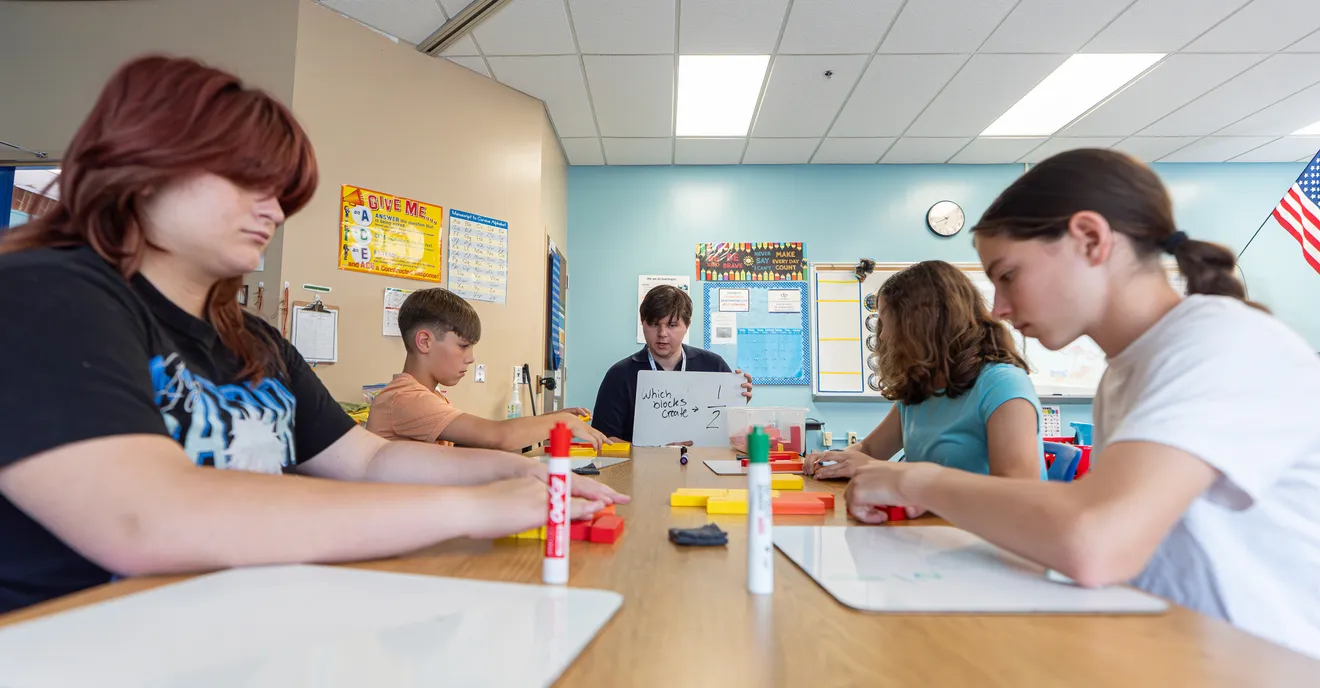
Instruction is multi-sensory, combining movement, visual, auditory, tactile and spoken experiences. In a 2nd and 3rd grade class during the summer program, students count syllables aloud while moving their heads back and forth, then hopping, then stomping, before writing down the word. An older group may work with blocks to represent fractions.
Teachers provide many opportunities for practice, and space that practice over time to ensure retention. The pillar is based on “the acknowledgement that our kids need more repetitions, frequently, to move something into long-term storage,” Head of School Phil Howell said. The final pillar — explicit instruction — emphasizes that all concepts are clear by the end of the lesson. Concepts are broken down into sub-concepts and sub-skills that are taught sequentially. Combined, these pillars aim to strengthen foundational skills in reading and writing for kids who have struggled in the past.
“All of our instruction … is set up for students with dyslexia or a specific learning difference in reading,” Whicker said.
Why it’s needed
Think about all the processes involved in copying something from the board, said Tammy French, a 3rd and 4th grade teacher who co-directs the summer program. From comprehending the words on the board, to spacing and sizing letters correctly, to remembering what letters come next while glancing between the board and the paper, there’s “so much involved” that may be difficult for a child with dyslexia or another learning disability.
Instruction isn’t “watered down,” Whicker said. “Our kids are so bright, they just need it scaffolded a different way, presented a different way, they need more opportunities to respond.” The de Paul School is located in Louisville, where Kentucky’s largest public school district has seen a rise in the number of students with disabilities since the start of the COVID-19 pandemic. Students with specific learning disabilities, such as dyslexia or dysgraphia, have increased about 10% in the last five school years.
Meanwhile, states across the country, including Kentucky, are pushing for a more science-backed and explicit approach to reading instruction, like what de Paul offers. This year, lawmakers banned a controversial method called three-cueing, a form of instruction associated with balanced literacy programs like Reading Recovery, though educators will have until the 2029-30 school year to stop using it.
When asked which pillars could work in general education classrooms, for students without learning disabilities, Howell pointed to the attention-based instruction.
“There’s just so many things that teacher do that don’t maintain attention. And then we get frustrated with those students who drift away or even become disruptive because they’ve gotten bored,” he said.
Students do not necessarily need a diagnosis to attend de Paul or its summer program, but they must have been evaluated to enroll full time. The summer program is roughly half full-time de Paul students, and half students from other schools who “catch up” during the summertime, Howell said.
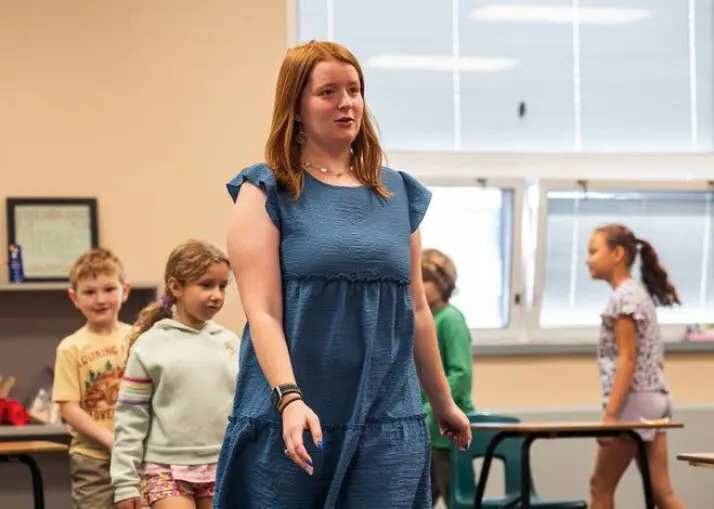
For students with dyslexia, ADHD or another learning difference, de Paul’s approach helps them make academic strides, Howell said. The school monitors standardized testing data and sees kids move from 5th percentile in reading to 13th to the average range, he said. And parents often report less struggles with homework or seeing their child read menus with ease for the first time.
The school is private, costing $1,500 for the summer program alone, and only aims to serve kids with specific needs. If a child has ADHD but doesn’t struggle academically, or if parents just want small class sizes, de Paul’s method may not work well.
For the students who attend, teachers work to reshape the narrative around their academic struggles.
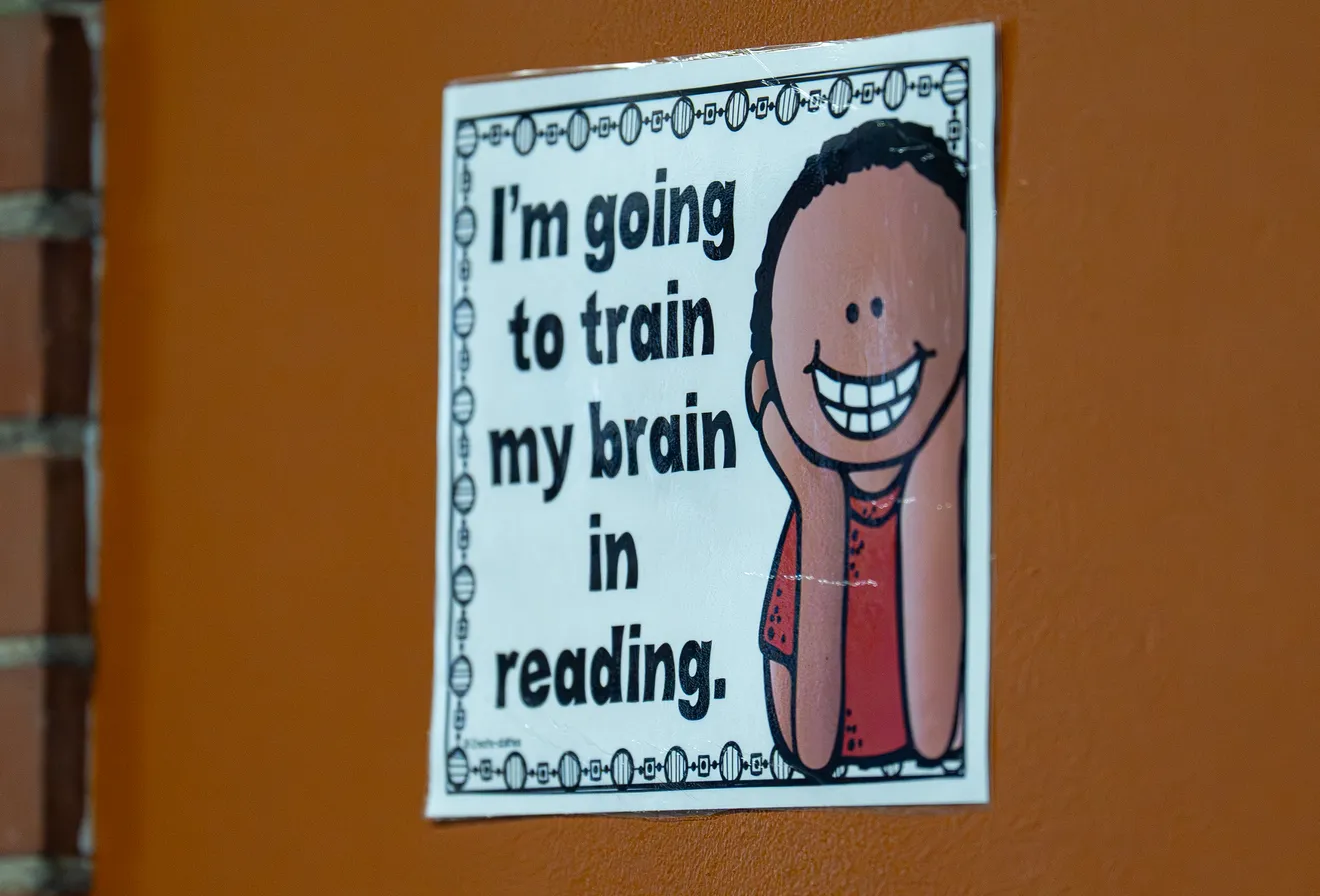
“The last decade of brain science really made it very clear the connection between emotional wellbeing and learning,” Howell said. “If a child is anxious, if they are fearful, there is simply no way they’re going to learn at their best.”
Children with a history of learning difficulties often struggle with confidence in the classroom, which means they take less risks when learning. The de Paul School offers a “success class” during the school year to explicitly talk about the strengths and challenges that come with having a learning disability, but the structured lessons work to build confidence, as well.
“Kids have to experience that they’re successful learners, that they are intelligent. They have to redefine what it means to have a learning difference,” Howell said. “They also need to look at themselves, the qualities that tend to get a lot of attention in class, and reframe those as not necessarily a bad thing. They’re part of being this beautiful person that you are.”